
Description
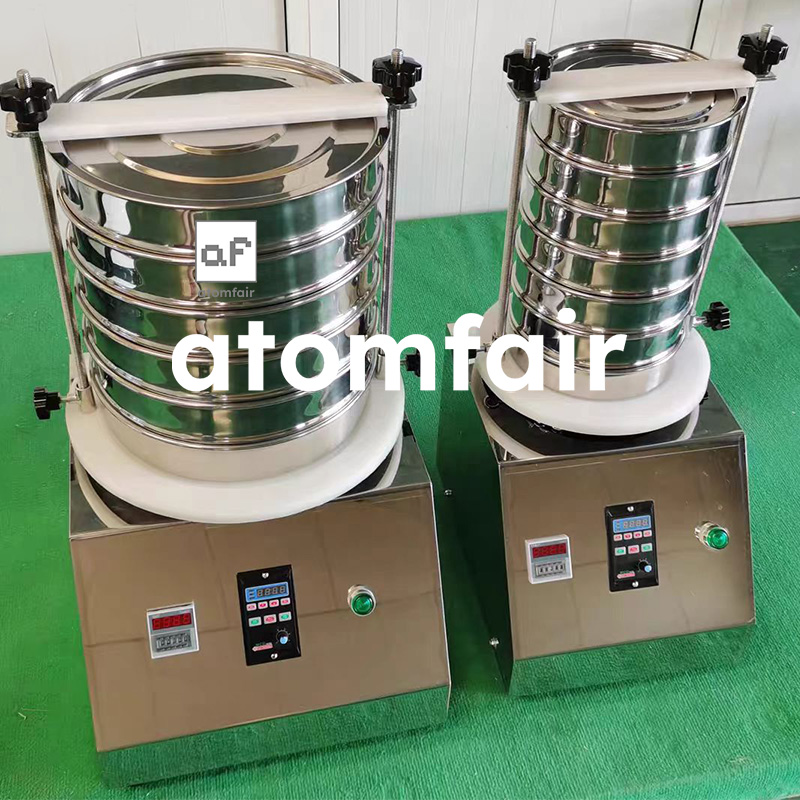
I. Product Overview
1.1 Product Positioning
1.2 Core Values
- Automated and Efficient Sieving: Adopting an electric vibration drive mode to replace traditional manual sieving, it realizes full automation of the sieving process, greatly reducing manual operation intensity. At the same time, it improves sieving efficiency by more than 30% and ensures consistency in batch sample processing.
- Accurate and Reliable Results: The precision-designed vibration structure is matched with standardized sieves, and the amplitude can be stably controlled within the range of 0-3mm. This effectively avoids material accumulation or incomplete sieving problems, with a particle size analysis error rate of less than 5%, meeting laboratory-level precision requirements.
- Convenient and Flexible Operation: Compatible with multiple specifications of sieves (Ø200/ø100/ø75mm), it supports simultaneous stacking of 9 layers of standard sieves, which can be flexibly combined according to different material particle size requirements. The single feeding capacity is 0-100g, suitable for refined sieving of small-batch samples.
II. Detailed Technical Parameters
2.1 Basic Performance Parameters
| Parameter Category | Specific Specifications | Description |
|---|---|---|
| Equipment Model | Laboratory-Specific 200mm Automatic Rocking Vibratory Sifter | Core identification, corresponding to the mainstream 200mm sieve size |
| Sieve Configuration | 9 layers of standard sieves | Can be increased or decreased according to needs, supporting multi-layer stacked sieving |
| Compatible Sieve Diameters | Ø200mm, ø100mm, ø75mm | Covers commonly used laboratory sieve specifications with strong compatibility |
| Particle Size Sieving Range | 0.025-3mm | Can process various types of materials from fine powder to coarse particles |
| Single Feeding Capacity | 0-100g | Suitable for small-batch sample analysis scenarios in laboratories |
| Amplitude Adjustment | 0-3mm | Can be adjusted according to material characteristics (such as fluidity, particle size) to optimize sieving effect |
| Operating Noise | ≤50dB | Lower than the noise standard of conventional laboratory equipment, creating a quiet working environment |
2.2 Power and Structural Parameters
| Parameter Category | Specific Specifications | Advantages |
|---|---|---|
| Drive Motor | 220V AC Voltage | Compatible with conventional laboratory power supply, no additional modification required |
| Motor Speed | 1450r/min | Stable speed ensures uniform vibration frequency and avoids material segregation |
| Motor Power | 0.125kw | Low power consumption design, low energy consumption during long-term use, while meeting vibration intensity requirements |
| Overall Dimensions | 400×330×360+N×50mm (N is the number of sieve layers) | Compact structure, small footprint, suitable for laboratory workbench layout |
| Main Unit Weight | 31kg | Moderate weight, easy to move and fix the equipment, avoiding severe shaking during operation |
III. Mesh Size and Mesh Count Conversion System
| Mesh Size (mm) | Mesh Count | Examples of Applicable Materials |
|---|---|---|
| 12.5 | 1/2 Inch | Coarse-grained ore, large-particle aggregates |
| 8 | 5/16 Inch | Medium-coarse grained building materials, mineral samples |
| 5 | 4 Mesh | Fertilizer particles, plastic pellets |
| 4 | 5 Mesh | Quartz sand (coarse grade), feed pellets |
| 3.2 | 6 Mesh | Metal slag (coarse grade), ceramic particles |
| 2.5 | 8 Mesh | Cement particles (coarse grade), coal samples |
| 2 | 10 Mesh | Flour (coarse grade), traditional Chinese medicine particles |
| 1.6 | 12 Mesh | Talc powder (coarse grade), food additives |
| 1.43 | 14 Mesh | Gypsum powder, coating raw materials |
| 1.25 | 16 Mesh | Starch, catalyst particles |
| 1 | 18 Mesh | Pigments (coarse grade), adsorbents |
| 0.9 | 20 Mesh | Graphite powder, abrasives |
| 0.85 | 22 Mesh | Carbon black, pharmaceutical intermediates (coarse grade) |
| 0.8 | 24 Mesh | Resin powder, pesticide technicals |
| 0.71 | 26 Mesh | Fluorescent powder, ceramic powder (coarse grade) |
| 0.63 | 28 Mesh | Lithium battery materials (coarse grade), fire extinguishing agents |
| 0.6 | 30 Mesh | Alumina powder, quartz powder (medium grade) |
| 0.56 | 32 Mesh | Calcium carbonate powder, kaolin |
| 0.5 | 35 Mesh | Titanium dioxide, mica powder |
| 0.45 | 40 Mesh | Zinc oxide, lithopone |
| 0.4 | 45 Mesh | Iron powder (fine grade), metal powder |
| 0.355 | 50 Mesh | Tungsten powder, cemented carbide powder |
| 0.315 | 55 Mesh | Nanomaterials (before agglomeration), catalysts (fine grade) |
| 0.3 | 60 Mesh | Pigments (fine grade), electronic-grade powder |
| 0.25 | 65 Mesh | Pharmaceutical powder, food additives (fine grade) |
| 0.22 | 70 Mesh | Antibiotic powder, cosmetic raw materials |
| 0.21 | 75 Mesh | Biological agents, fine chemical products |
| 0.2 | 80 Mesh | Enzyme preparations, protein powder |
| 0.16 | 90 Mesh | Ultrafine flour, pharmaceutical excipients |
| 0.15 | 100 Mesh | Pollen, ultrafine pigments |
| 0.135 | 110 Mesh | Bacterial culture media, electronic pastes |
| 0.125 | 120 Mesh | Superconducting material powder, aerospace materials |
| 0.111 | 130 Mesh | Quantum dot materials, nano-ceramic powder |
| 0.105 | 140 Mesh | Rare earth powder, luminescent materials |
| 0.1 | 150 Mesh | Biochip raw materials, medical nano-powder |
| 0.097 | 160 Mesh | Semiconductor materials, optical glass powder |
| 0.088 | 180 Mesh | Laser cladding powder, 3D printing materials (fine grade) |
| 0.08 | 190 Mesh | Fuel cell catalysts, superconducting powder |
| 0.075 | 200 Mesh | Medical implant material powder, electronic-grade ceramic powder |
| 0.071 | 220 Mesh | Nano-coating materials, bioactive powder |
| 0.063 | 250 Mesh | Quantum computing materials, ultrafine metal powder |
| 0.055 | 280 Mesh | Gene carrier materials, nano-composite materials |
| 0.054 | 300 Mesh | Targeted drug carriers, ultra-precision abrasive powder |
| 0.048 | 320 Mesh | Microelectronic packaging materials, optical crystal powder |
| 0.045 | 325 Mesh | Aero-engine coating powder, nuclear industry materials |
| 0.041 | 340 Mesh | Quantum communication materials, ultra-high purity powder |
| 0.04 | 360 Mesh | Spacecraft high-temperature resistant materials, biomedical nano-powder |
| 0.0385 | 400 Mesh | Nano-sensor materials, superconducting thin film raw materials |
| 0.0308 | 500 Mesh | Quantum dot display materials, ultra-fine catalysts |
| 0.026 | 600 Mesh | Biochip conductive paste, nano-energy storage materials |
| 0.02 | 800 Mesh | Superconducting ceramic powder, quantum computing chip raw materials |
| 0.017 | 900 Mesh | Ultra-high purity metal powder, nano-electronic materials |
| 0.015 | 1000 Mesh | Biomedical coating powder, quantum communication device materials |
| 0.012 | 1250 Mesh | Nano-photonic materials, ultra-precision electronic component powder |
| 0.01 | 1400 Mesh | Quantum dot luminescent materials, ultra-high precision abrasive powder |
| 0.009 | 1600 Mesh | Nano-biological materials, superconducting quantum device raw materials |
| 0.0085 | 1800 Mesh | Ultra-high purity nano-powder, quantum sensing materials |
| 0.0075 | 2000 Mesh | Carbon nanotube composite materials, quantum information materials |
| 0.005 | 2400 Mesh | Graphene composite materials, ultra-high precision nano-materials |
IV. Application Scenarios and Industry Solutions
4.1 Core Application Fields
| Industry Field | Specific Application Scenarios | Equipment Value |
|---|---|---|
| Materials Science and Engineering (MSE) | New material particle size distribution analysis, composite material component sieving, nanomaterial agglomeration detection | Assists in material performance research and provides accurate particle size data support |
| Chemical Industry | Catalyst particle size classification, pigment dispersibility inspection, coating raw material screening | Ensures stable quality of chemical products and improves production consistency |
| Pharmaceutical Industry | Traditional Chinese medicine particle classification, Western medicine powder sieving, pharmaceutical excipient purity inspection | Complies with GMP standards, avoids material cross-contamination and ensures drug safety |
| Metallurgical Industry | Metal powder particle size control, ore sample separation, alloy powder screening | Optimizes metallurgical processes and improves metal material performance |
| Geological Exploration | Core sample analysis, soil particle size detection, mineral component sieving | Provides accurate sample particle size data for geological research and assists in resource exploration |
4.2 Typical Application Cases
- Pharmaceutical Enterprise Quality Control: Sieving traditional Chinese medicine particles through 10-80 meshes to ensure particle uniformity meets pharmacopoeia standards and avoid differences in dissolution rate during administration.
- Material Laboratory Research: Finely sieving nano-ceramic powder through 200-1000 meshes to separate powders with different agglomeration degrees and assist in material performance testing.
- Geological Exploration Analysis: Classifying soil samples through 4-200 meshes to analyze the proportion of mineral components in soils of different particle sizes and assist in geological structure judgment.
V. Operation and Maintenance Specifications
5.1 Operation Process (Standardized Steps)
Preparatory Work:
- Check if the equipment power supply matches (220V) and if the power cord is damaged.
- According to sieving requirements, select sieves with corresponding mesh counts, stack them in the order of “coarse mesh at the bottom, fine mesh at the top”, and a maximum of 9 layers can be installed.
- Clean the internal and external surfaces of the sieves to ensure no residual materials and avoid cross-contamination.
Sample Feeding:
- Weigh 0-100g of samples and evenly pour them into the topmost sieve, then close the sieve cover tightly.
- Adjust the equipment amplitude (0-3mm). For materials with poor fluidity, the amplitude can be appropriately increased (2-3mm), while for fine powder materials, a small amplitude (0.5-1mm) is recommended.
Startup and Operation:
- Press the start button, and the equipment will start automatic vibrating sieving. The conventional sieving time is 5-10 minutes (can be adjusted according to material characteristics).
- During operation, observe if the equipment has abnormal noise or shaking. If any abnormality is found, stop the machine immediately for inspection.
Completion and Cleaning:
- After sieving, turn off the power, remove the sieves layer by layer, collect the materials in each layer and weigh them for recording.
- Clean the equipment and sieves according to the “Daily Cleaning” requirements and organize the experimental data.
5.2 Maintenance System
| Maintenance Category | Maintenance Cycle | Specific Operations | Notes |
|---|---|---|---|
| Daily Cleaning | After each use | 1. Clean residual materials in the sieves with a soft brush (nylon material to avoid scratching the sieve mesh);
2. Blow off dust on the equipment surface and in gaps with an air blower; 3. Wipe the equipment shell with a dry soft cloth, and do not clean with water or organic solvents |
Do not use hard-bristled brushes or metal tools for cleaning to avoid damaging the sieve mesh;
For fine powder materials, cleaning in a fume hood is recommended to prevent dust diffusion |
| Drive Component Maintenance | Every 3 months (or after 50 uses) | 1. Open the motor end cover of the equipment and check the wear condition of the bearings;
2. Add special lubricating oil (3# lithium-based grease is recommended), with a grease addition of 0.5-1g each time; 3. Rotate the motor shaft to ensure uniform lubrication and no jamming |
Do not use inferior lubricating oil to avoid bearing corrosion;
Do not add excessive grease to prevent oil spillage from contaminating the equipment at high temperatures |
| Sieve Maintenance | After every 20 uses | 1. Check if the sieve mesh is damaged or deformed, and replace it in time if there is any problem;
2. Calibrate the sieve mesh accuracy with standard samples to ensure accurate sieving results; 3. When storing sieves, lay them flat or hang them vertically to avoid stacking and squeezing |
Do not continue to use damaged sieve meshes to avoid affecting analysis results;
National standard materials (such as standard glass beads) are recommended for calibration samples |
| Long-term Storage Maintenance | When not in use for more than 1 month | 1. Thoroughly clean the equipment and sieves to ensure no residual materials;
2. Apply a thin layer of anti-rust oil to the motor bearings and metal connectors of the equipment; 3. Cover the equipment with a dust cover and store it in a dry, well-ventilated environment free of corrosive gases (temperature 5-30℃, humidity ≤60%) |
Do not store in direct sunlight or near heat sources;
Before reuse, remove the dust cover, clean the anti-rust oil, and run it for 5 minutes to confirm normal operation |
If you’re interested, have any questions, or have specific customization requirements, please feel free to contact us at inquiry@atomfair.com.
Reviews
There are no reviews yet.