Description
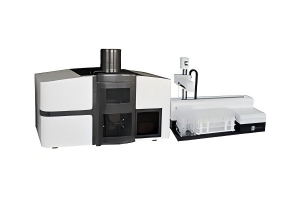
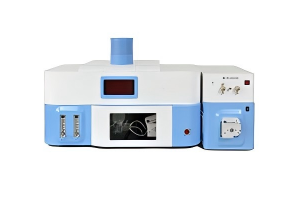
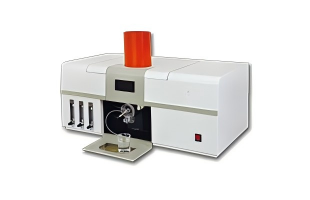
Atomfair-GFA892 Flame Atomic Fluorescence Gold Analyzer
I. Product Overview
Atomfair-GFA892 Flame Atomic Fluorescence Gold Analyzer is developed based on the principle of flame atomic fluorescence, specially designed for gold mines, non-ferrous metal industry, geological prospecting, metallurgical electrolysis and other fields, which can realize accurate analysis of precious metals and non-ferrous metals. Compared with the atomic absorption flame method, its analytical sensitivity is increased by 2 to 3 orders of magnitude, which can meet the element detection requirements in multiple scenarios.
II. Application Fields
- Gold mines: Determination of gold content in raw ore, tailings, pregnant solution and barren solution in cyanidation leaching solution, gold-loaded carbon and desorption solution
- Metallurgical industry: Metallurgical sample detection
- Geological prospecting: Geological general prospecting
- Other fields: Detection of related elements in non-ferrous metal mines, detection of mercury elements in smelting and electroplating industries
III. Technical Parameters (International Standard)
| Test Element | Detection Limit | Test Element | Detection Limit |
| Au (Gold) | <0.2 ng/mL | In (Indium) | <2.0 μg/mL |
| Cu (Copper) | <0.02 ng/mL | Ni (Nickel) | <0.002 μg/mL |
| Ag (Silver) | <0.01 ng/mL | Cr (Chromium) | <0.08 μg/mL |
| Cd (Cadmium) | <1.0 ng/mL | Co (Cobalt) | <0.005 μg/mL |
| Zn (Zinc) | – | Fe (Iron) | – |
| Mn (Manganese) | – | Hg (Mercury) | – |
| – | Pb (Lead) | – | – |
- Repeatability (RSD): <0.7%
- Linear range: More than three orders of magnitude
IV. Product Features
- High sensitivity: The detection limit can reach PPb level, accurately capturing low-content elements
- Strong stability: The test repeatability (RSD) is less than 0.7%, and the data is reliable and consistent
- Fast test: The test time for a single sample is about 5 seconds, improving detection efficiency
- Low use cost: The combustible gas required for the operation of the instrument is liquefied petroleum gas, and a single tank can be used for one year
V. Core Functions
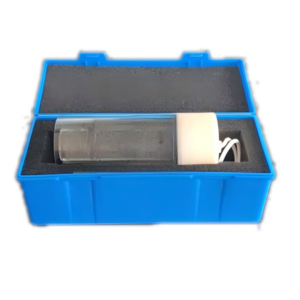
- Adopting high-efficiency stainless steel jacketed glass nebulizer with corrosion resistance, high and stable nebulization efficiency
- Equipped with double-layer multi-head quartz atomizer, which effectively improves atomization efficiency and further improves test sensitivity
- High-intensity and high-performance hollow cathode lamp is selected as the light source, which prolongs the service life and optimizes the sensitivity and signal-to-noise ratio
- With standard calibration curve function to ensure the accuracy of detection
- The software test data interface supports flexible editing. The sample number, conversion coefficient, sample weight and other parameters can be freely adjusted before and after the test to realize automatic conversion
- Peak height integration method is adopted, the whole test process can be observed in real time, which is convenient for adjusting the three-dimensional parameters of the atomizer
- Friendly software interface, supporting a variety of curve methods and test methods, and can recommend better instrument test conditions; Provide graphic display, playback, statistics and query functions of test data, support page saving and printing of various graphics and data; Suspended measurement window increases the number of displayable information such as fluorescence intensity and blank value
- Automatic data saving, supporting output reports in a variety of internationally common formats such as Word, Pdf, Excel
- With data output backup and recovery function, it can output .bak files of standard curve, test data and other information, which is convenient for data backup and recovery
VI. Rapid Test Method
(I) Related tests for gold mines
- Relative method (rapid test of gold in raw ore): Take 20 – 200 grams of sample, stir and leach with leaching solution for 2 hours, then take the clear solution for direct detection to get the gold content
- Rapid determination of gold content in cyanidation leaching solution: Take the pregnant solution and tail solution leached by sodium cyanide, filter and detect directly, the lower limit of determination can be less than 0.02 g/ton
- Rapid determination of gold in gold-loaded carbon: Take representative carbon sample and grind it to less than 40 mesh, weigh 0.2 – 1.0g and put it into a 50mL porcelain crucible, ash it in an electric furnace or high temperature furnace, dissolve it with aqua regia and make up the volume to 100mL, then detect it directly
(II) Related tests for non-ferrous metal mines (Copper, Lead, Zinc, Cobalt, Nickel, Silver)
Take 0.2 gram of sample into a 50mL beaker, add 10mL aqua regia, melt on an electric hot plate for 30 minutes, transfer to a 100mL volumetric flask to make up the volume, and detect directly after the solution is clarified.
(III) Mercury element test in smelting and electroplating industries
- Solid sample determination: Take 0.2 – 1.0g sample into a 100mL beaker, add 10mL nitric acid, heat and dissolve on an electric hot plate for 20 – 30 minutes, transfer to a 100mL volumetric flask to make up the volume, and detect directly after clarification
- Liquid sample determination: Filter the sample and take the supernatant for direct detection
If you’re interested, have any questions, or have specific customization requirements, please feel free to contact us at inquiry@atomfair.com.