
Description
I. Basic Product Information
1.1 Core Identification
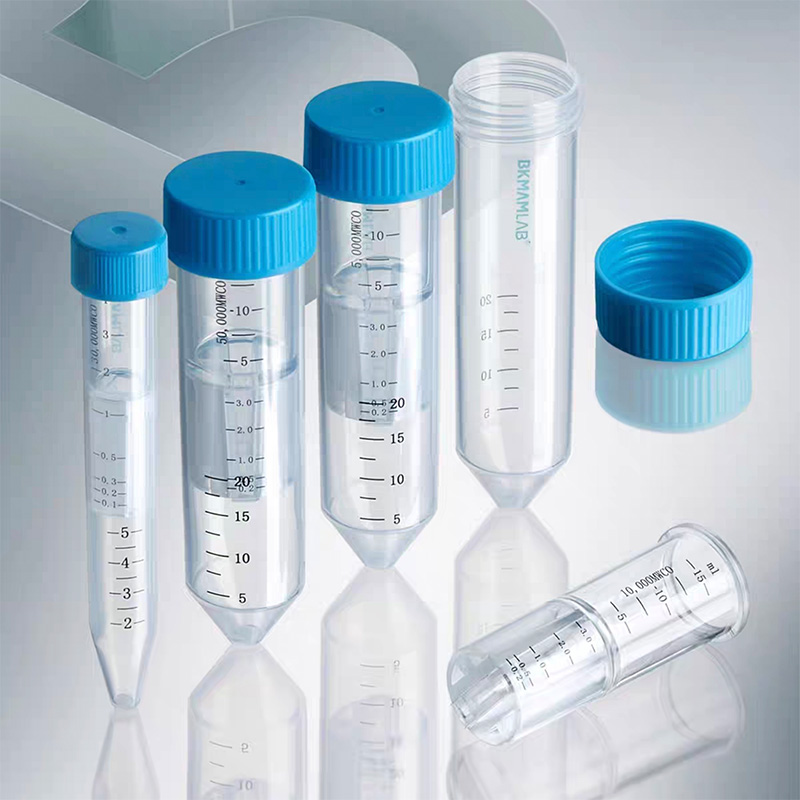
- Product Name: Centrifugal Filter Tubes
- Product Positioning: Specialized Laboratory Consumables for Sample Separation and Purification
- Core Principle: Integrates centrifugation technology and membrane filtration technology. Drives samples through the built-in precision filter membrane via centrifugal force to achieve rapid separation, purification, and concentration.
- Inquiry Method: For detailed specifications and quotations, please contact inquiry@atomfair.com
1.2 Product Definition and Introduction
- Product Definition: Centrifugal filter tubes are innovative laboratory consumables mainly made of biocompatible materials, with built-in precision filter membranes of specific pore sizes. Using centrifugal force as the power source, they replace traditional gravity filtration or pressure filtration to achieve efficient separation, purification, and concentration of biological samples, suitable for various laboratory sample pretreatment scenarios.
- Product Introduction: Centrifugal filter tubes are commonly used tools in laboratories for rapid sample separation, purification, or concentration, cleverly combining the advantages of centrifugation technology and filtration technology. Compared with traditional filtration methods, they do not require external pressure equipment and can be operated only with a conventional centrifuge, greatly simplifying the experimental process while ensuring high recovery rate and low sample loss. They are core consumables in fields such as biomacromolecule research, molecular diagnostics, and drug development.
II. Core Technical Specifications
2.1 Basic Specification Parameter Table
| Specification Category | Specification Option 1 | Specification Option 2 | Specification Option 3 | Specification Option 4 | Application Scenarios | |||
|---|---|---|---|---|---|---|---|---|
| Effective Membrane Area | 0.6cm² | 1.4cm² | 3.4cm² | 7.4cm² | Micro-sample processing | Small-volume sample processing | Medium-volume sample processing | Large-volume sample processing |
| Maximum Sample Volume (Fixed-Angle Centrifugation) | 0.5mL | 2mL | 4mL | 12mL | Micro-sample centrifugation | Routine sample centrifugation | Medium-volume sample centrifugation | Large-volume sample centrifugation |
| Maximum Sample Volume (Swinging-Bucket Centrifugation) | – (Not Applicable) | 2mL | 4mL | 15mL | – | Routine swinging-bucket centrifugation | Medium-volume swinging-bucket centrifugation | Large-volume swinging-bucket centrifugation |
| Recommended Final Concentrate Volume | 15-20μL | 20-70μL | 80-200μL | 150-300μL | Ultra-high concentration | High concentration | Routine concentration | Low concentration |
2.2 Key Technical Parameters (Aligned with International Standards)
| Technical Parameter | Standard Requirement | Product Characteristics | Reference Standard |
|---|---|---|---|
| Membrane Material | Hydrophilic Polyethersulfone (PES) or Regenerated Cellulose (RC) | Adopts low protein adsorption material to ensure sample recovery rate ≥95% | ISO 15630-1 Filter Material Standard |
| Pore Size Tolerance | ±10% | High uniformity of membrane pore size to avoid sample leakage or clogging | ASTM E1288 Membrane Pore Size Test Standard |
| Centrifugal Temperature Resistance | -20℃~60℃ | Compatible with low-temperature centrifugation (e.g., 4℃ protein sample processing) | IEC 61010 Laboratory Equipment Temperature Standard |
| Maximum Centrifugal Force | 16,000×g | Withstands high centrifugal force to shorten separation time | ISO 10456 Centrifugal Equipment Safety Standard |
| Biocompatibility | Non-cytotoxic, non-sensitizing | Meets the requirements of biological sample processing without affecting sample activity | ISO 10993-5 Biocompatibility Test Standard |
2.3 Product Classification (By Function)
1. Ultrafiltration Centrifugal Filter Tubes
- Function: Used for desalination, buffer exchange, and concentration of biomacromolecules (proteins, nucleic acids, polysaccharides, etc.)
- Molecular Weight Cut-Off (MWCO) Options: 1kDa, 3kDa, 10kDa, 30kDa, 100kDa
- Typical Applications: Protein concentration, RNA/DNA purification, antibody purification
2. Microporous Filtration Centrifugal Filter Tubes
- Function: Used for solution sterilization, sample clarification, and particle removal
- Membrane Pore Size Options: 0.1μm, 0.22μm, 0.45μm, 1.0μm
- Typical Applications: Sterilization of cell culture supernatants, sample pretreatment for impurity removal, colloidal solution clarification
III. Product Advantages and Characteristics
3.1 Performance Advantages
- Efficient Separation: Driven by centrifugal force, the separation speed is 5-10 times faster than traditional gravity filtration, and one concentration or purification process can be completed in 10-30 minutes.
- High Recovery Rate: Low adsorption membrane material combined with optimized vertical structure design ensures ≥95% recovery rate of biomacromolecule samples and <3% loss rate of micro-samples (<10μL).
- Easy Operation: No assembly or external equipment required, only three-step operation of “sample loading → centrifugation → collection”, complying with GLP laboratory specifications and reducing human operation errors.
- Strong Compatibility: Compatible with mainstream fixed-angle centrifuges and swinging-bucket centrifuges on the market, no special equipment modification needed, meeting the equipment configuration needs of different laboratories.
3.2 Quality and Safety Characteristics
- Sterility Level: Sterilized by γ-ray, with sterility level reaching SAL 10⁻⁶ (sterility probability of each product unit ≥99.9999%), which can be directly used in sterile experiments such as cell culture.
- Batch Stability: Each batch of products undergoes pore size uniformity, leakage rate, and adsorption rate tests, with inter-batch CV value <5% to ensure experimental reproducibility.
- Chemical Resistance: Tolerates common laboratory solvents (such as ethanol, methanol, buffers, low-concentration acid-base solutions) without leachables contaminating samples.
IV. Application Fields
| Application Field | Specific Application Scenarios | Recommended Product Specifications | Operation Points |
|---|---|---|---|
| Biomacromolecule Research | Protein concentration and desalination, RNA/DNA purification, oligonucleotide concentration | 1.4cm² membrane area + 2mL volume + 10kDa MWCO (Ultrafiltration Type) | Low-temperature centrifugation at 4℃ to avoid protein denaturation |
| Molecular Diagnostics | Viral nucleic acid extraction and purification, clinical sample pretreatment, nucleic acid detection sample concentration | 0.6cm² membrane area + 0.5mL volume + 0.22μm pore size (Microporous Filtration Type) | Perform nucleic acid extraction immediately after centrifugation to avoid contamination |
| Drug Development | Antibody drug concentration, recombinant protein purification, drug metabolism sample pretreatment | 3.4cm² membrane area + 4mL volume + 30kDa MWCO (Ultrafiltration Type) | Control centrifugal speed ≤10,000×g to protect protein activity |
| Environmental Testing | Water microbial concentration, environmental pollutant enrichment, soil extract purification | 7.4cm² membrane area + 15mL volume + 0.45μm pore size (Microporous Filtration Type) | Pre-filter to remove large particle impurities first to avoid membrane clogging |
| Food Analysis | Food pathogen detection, food additive separation, residual pesticide detection | 1.4cm² membrane area + 2mL volume + 0.22μm pore size (Microporous Filtration Type) | Wash the membrane with buffer after centrifugation to improve detection sensitivity |
If you’re interested, have any questions, or have specific customization requirements, please feel free to contact us at inquiry@atomfair.com.
Reviews
There are no reviews yet.