Description
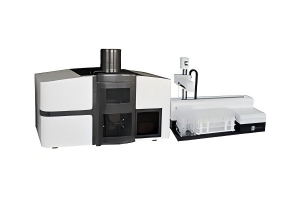
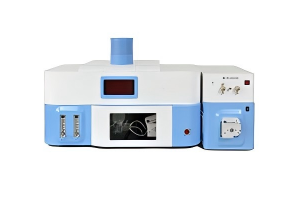
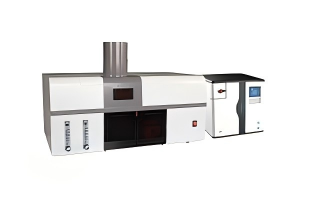
Atomfair-LC-AFS 680 Liquid Chromatography-Atomic Fluorescence Spectrometer (Atomic Fluorescence Speciation Analyzer)
I. Core Product Applications
This instrument is dedicated to accurate elemental speciation analysis, with core application scenarios including:
- Food Testing: Speciation analysis of arsenic (As), mercury (Hg) and other elements in food, which can accurately detect harmful inorganic arsenic, organic mercury and other forms, and clearly distinguish the toxicity differences of elements in different forms (e.g., arsenosugars and arsenobetaine in organic arsenic are almost non-toxic, while inorganic arsenic compounds are highly toxic).
- Water Quality Testing: Efficient detection of methylmercury (MetHg) and ethylmercury (EtHg) in water quality to meet relevant testing requirements.
II. Compliant Standards
- Determination of methylmercury and ethylmercury in water quality: Adopts internationally universal detection methods (corresponding to the core technical requirements of the original standard)
- Determination of arsenic and mercury speciation in food: In line with the relevant international technical specifications for food testing (covering the core testing indicators of the original standards for the determination of total arsenic, inorganic arsenic, total mercury and organic mercury in food)
III. Working Principle
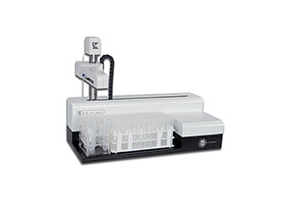
The instrument consists of three parts: liquid phase pump unit, docking unit and atomic fluorescence host, with a clear and efficient detection process:
- The sample first enters the liquid phase pump unit, and the speciation and valence state of elements are separated through the chromatographic column;
- The separated sample enters the docking unit, which is responsible for realizing the signal docking between the liquid phase pump and the atomic fluorescence host, and converting organic substances separated by liquid phase into inorganic substances through digestion function;
- The treated sample enters the atomic fluorescence host, and the detection is completed through hydrogenation reaction and the results are output.
IV. Core Product Features
- Integrated speciation analysis module: Can be seamlessly docked with the atomic fluorescence host without dual reaction systems, capable of real-time detection and continuous data collection of post-column effluent, greatly improving test efficiency.
- User-friendly operation design: Equipped with a large-screen LCD operation panel, which can directly observe the working status of the liquid phase, and the working parameters of the liquid phase pump can be directly debugged through the control panel for convenient operation.
- Safe and efficient digestion: Adopts a fully enclosed built-in digestion device with a high-intensity ultraviolet generator, which can effectively digest analytical components and improve detection performance, avoid ultraviolet radiation damage to the human body, and eliminate peak broadening caused by air resistance generated by heat.
- Consumable protection design: Configured with a special filtration device to pre-trap substances that can be firmly adsorbed by the analytical column and cannot be washed by the mobile phase, effectively protecting and extending the service life of the analytical column.
- Flexible elution configuration: Optional single or binary liquid phase pump, supporting isocratic and gradient elution functions to adapt to different testing requirements.
- Optimized host design: Internal pipeline-free modular structure with streamlined layout for convenient operation and maintenance; adopts ICP-MS continuous sampling mode with higher test efficiency, capable of testing 150 samples per hour; newly added function of quickly establishing standard curve to further improve work efficiency; no power pump required, waste liquid is discharged automatically for safer use.
V. Key Technical Indicators
| Elemental Speciation | Specific Form | Minimum Detectable Amount (ng) | Precision | Analysis Time (min) | Linear Range |
|---|---|---|---|---|---|
| Arsenic (As) | As(III) | ≤0.03 | 3% | Mixed Standard <10 | Three orders of magnitude |
| Dimethylarsenic (DMA) | ≤0.05 | 3% | Mixed Standard <10 | Three orders of magnitude | |
| Monomethylarsenic (MMA) | ≤0.05 | 3% | Mixed Standard <10 | Three orders of magnitude | |
| As(V) | ≤0.05 | 3% | Mixed Standard <10 | Three orders of magnitude | |
| Mercury (Hg) | Hg(II) | ≤0.01 | 3% | Mixed Standard <10 | Three orders of magnitude |
| Methylmercury (MetHg) | ≤0.01 | 3% | Mixed Standard <10 | Three orders of magnitude | |
| Ethylmercury (EtHg) | ≤0.02 | 3% | Mixed Standard <10 | Three orders of magnitude | |
| Selenium (Se) | Selenocysteine (SeCys) | ≤0.3 | 3% | Mixed Standard <10 | Three orders of magnitude |
| Selenomethylselenocysteine (SeMeCys) | ≤1 | 3% | Mixed Standard <10 | Three orders of magnitude | |
| Se(IV) | ≤0.1 | 3% | Mixed Standard <10 | Three orders of magnitude | |
| Selenomethionine (SeMet) | ≤2 | 3% | Mixed Standard <10 | Three orders of magnitude | |
| Antimony (Sb) | Sb(V) | ≤0.1 | 3% | Mixed Standard <10 | Three orders of magnitude |
| Sb(III) | ≤0.5 | 3% | Mixed Standard <10 | Three orders of magnitude |
VI. Reference Analysis Spectrum
(Taking arsenic as an example)
- Test sample: 10ng/mL arsenic (As) mixed standard solution
- Key spectrum information: Retention time covers 0-10min, which can clearly show the separation peaks of different arsenic forms with stable peak signal and good separation effect.
If you’re interested, have any questions, or have specific customization requirements, please feel free to contact us at inquiry@atomfair.com.