Description
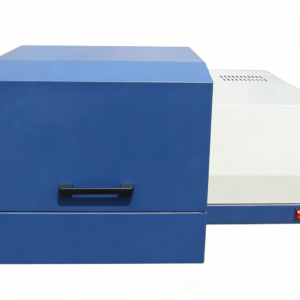
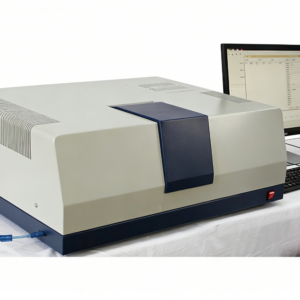
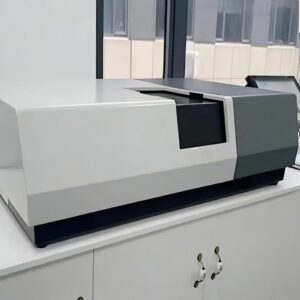
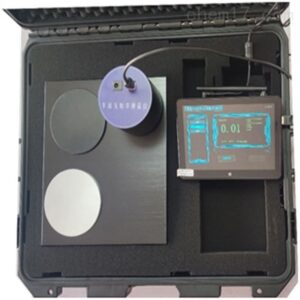
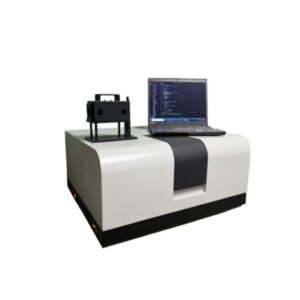
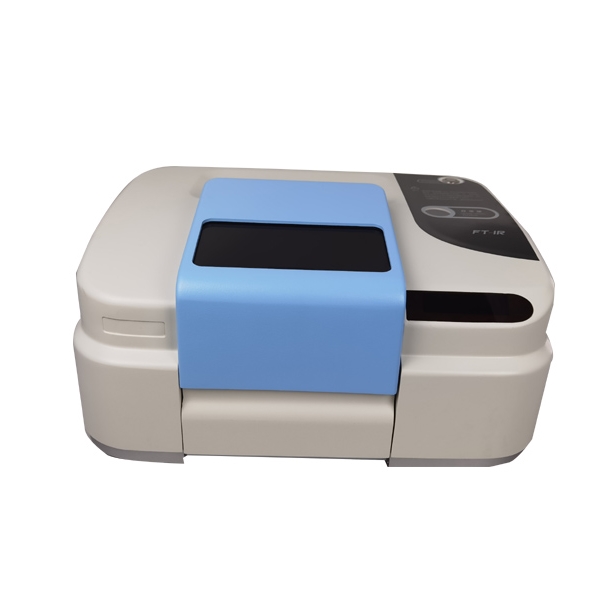
Atomfair Architectural Glass Visible Light Transmittance & Shading Coefficient Tester
Product Overview
Atomfair Architectural Glass Visible Light Transmittance & Shading Coefficient Tester is a high-precision optical testing equipment developed in accordance with international general standards, specifically designed for the comprehensive detection of optical and thermal properties of architectural glass, energy-saving coated glass, photovoltaic glass and other products. Covering the full ultraviolet-visible-near infrared band, the equipment can complete multi-dimensional core parameter determination in one stop, with test data accuracy comparable to international testing requirements. It is widely used in glass production quality inspection, construction engineering acceptance, green building energy conservation evaluation, building materials scientific research experiments and other fields, providing professional and reliable technical support for glass optical performance testing.
Core Functions
- Integrated Multi-Parameter Detection: Accurately measures key indicators such as visible light transmittance, direct solar transmittance/reflection ratio, total solar transmittance, ultraviolet transmittance and shading coefficient without the need for multiple equipment cooperation;
- Full-Waveband Precise Scanning: Covers the complete 300nm~2500nm band, supports multi-level sampling interval adjustment to adapt to different precision detection needs, with no deviation in data collection;
- Flexible Dual-Mode Adaptation: Supports two core measurement modes (transmittance, reflectance), compatible with various architectural glass, automotive glass, photovoltaic glass and other samples, with strong practicality;
- Efficient Data Management: Test data is automatically calculated and counted, supporting fast export, storage and standardized report generation, which can be directly used as the basis for quality inspection filing or scientific research archiving.
Technical Parameters (International Standard)
| Item</ | Specification</ |
|---|---|
| Wavelength Range | 300nm~2500nm full-waveband coverage |
| Wavelength Accuracy | 360nm~900nm: ≤±0.3nm; 900nm~2500nm: ≤±1nm |
| Wavelength Repeatability | ≤0.1nm |
| Spectral Bandwidth | 300nm~1100nm: 1.5nm; 1100nm~2500nm: 2.5nm |
| Photometric Accuracy | ≤±0.5%τ |
| Photometric Repeatability | ≤0.2%τ |
| Stray Light | ≤0.1%τ at 340nm; ≤0.05%τ at 400nm~2500nm |
| Photometric Range | 0~3A absorbance range |
| Sampling Interval | 0.1nm, 0.2nm, 0.5nm, 1nm, 2nm, 5nm, 10nm (multi-level adjustable) |
| Measurement Modes | Transmittance, Reflectance |
| Grating Configuration | UV/VIS band: 1200L/mm; NIR band: 300L/mm |
| Receiver | PMT (ultraviolet-visible light region), PbS (near-infrared light region) |
| Data Interface | USB2.0 (compatible with 3.0) |
| Supported Systems | Windows XP, Windows 7, Windows 8, Windows 10 |
| Dimensions | 730mm × 650mm × 260mm |
| Equipment Weight | 28Kg |
Product Features
- International Standard Adaptation: Developed with reference to international general testing standards throughout, no national standard-related expressions, test results can be adapted to global glass quality inspection and certification needs;
- Excellent Detection Precision: Core optical parameters (wavelength accuracy, photometric repeatability, etc.) meet international high standards, strict control of stray light, and true data without deviation;
- Simple & Easy to Operate: No complex professional training required, the software interface is intuitive and easy to understand, automatically generating data results, greatly improving detection efficiency;
- Stable, Durable & Wide Adaptability: Rugged body structure, stable performance of core optical components, meeting multiple scenarios such as laboratory fixed detection and on-site mobile sampling inspection, with long service life;
- Outstanding Cost-Effectiveness: Integrates multiple core detection functions, avoiding repeated purchase of multiple equipment, reducing detection costs, and adapting to different needs such as industrial mass production and scientific research experiments.
Applicable Detection Scope
- Optical and thermal performance testing of various architectural flat glass, coated glass, Low-E energy-saving glass and insulated glass;
- Transmittance, reflectance and shading coefficient determination of automotive safety glass and photovoltaic glass;
- Factory quality inspection, engineering acceptance and energy-saving parameter verification of glass deep-processing products;
- Optical performance research and test analysis of glass in the field of building materials scientific research.
If you’re interested, have any questions, or have specific customization requirements, please feel free to contact us at inquiry@atomfair.com.