Description
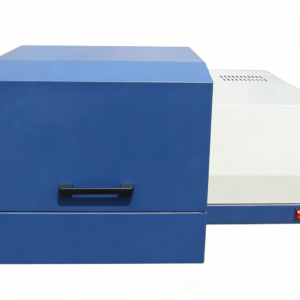
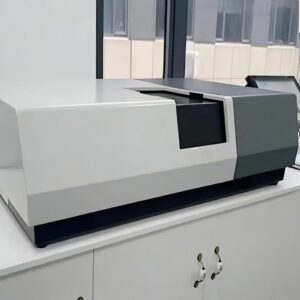
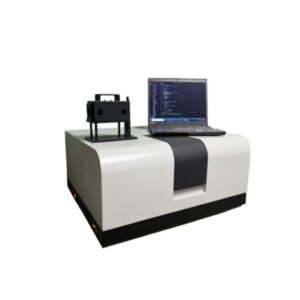
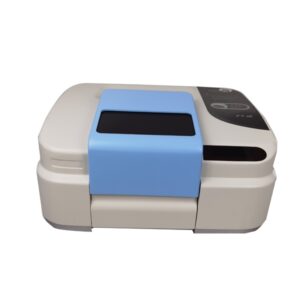
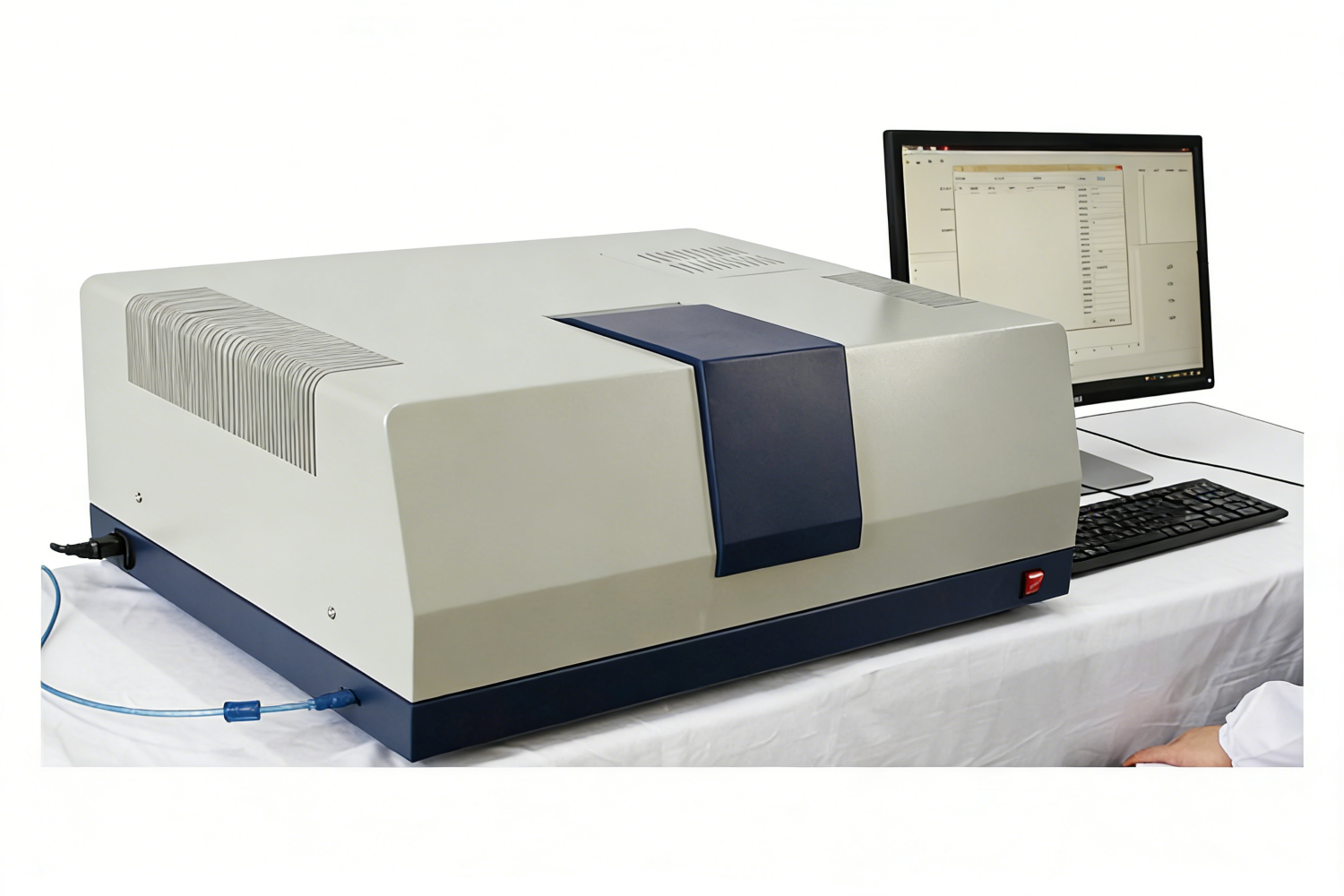
Atomfair-GL-794 Architectural Glass Optical & Thermal Tester
1. Product Overview
Atomfair-GL-794 is a high-performance professional device specially designed for energy-saving testing of architectural glass, with core performance fully complying with the international standard ISO 9050-2003. It can accurately measure key optical and thermal parameters including visible light transmittance, direct solar transmittance, total solar energy transmittance and shading coefficient, suitable for various architectural glass samples of 20-100mm (thickness ≤20mm). The whole machine adopts imported accessories (including light source and dual detectors) with dual-beam optical system, featuring low noise, high precision and strong stability. The automatic operation process simplifies testing steps, widely used in architectural glass production quality control, engineering testing, scientific research experiments and trade compliance testing, providing authoritative data support for glass energy-saving performance evaluation.
2. Core Features
- Accurate detection of full parameters: Focus on the core energy-saving testing needs of architectural glass, one-stop coverage of key parameters such as visible light transmittance and direct solar transmittance, no need for additional equipment, meeting comprehensive testing scenarios.
- Supported by high-end imported configuration: Imported light source with longer service life and better luminous stability; equipped with dual imported detectors for UV/VIS/NIR bands, sensitive to weak signals with low noise and superior detection accuracy.
- High-precision optical design: Dual-beam, dual-grating and dual-detector optical system effectively reduces background interference and improves test accuracy; wavelength accuracy ±0.5nm (UV/VIS), ±2.0nm (NIR), all core indicators reach the international advanced level.
- Fully automatic operation: Support automatic computer control, automatic calibration on startup and automatic completion of data collection and processing; dedicated machine for special use, easy for laboratory management, efficient testing can be completed without professional attendance.
- Fast and efficient data transmission: Equipped with USB2.0 communication interface, single scan only takes 5 minutes with stable and fast data transmission, greatly improving the efficiency of batch sample testing.
- Intelligent software with complete functions: Matching professional testing software, supporting automatic instrument reset, parameter setting, spectral data processing, export data in text/EXCEL format and directly print test reports with convenient operation.
- Wide sample adaptation range: Measurable sample specification is 20-100mm with thickness ≤20mm, compatible with various architectural glass such as ordinary transparent glass, insulating glass and coated glass, meeting the needs of different application scenarios.
- Flexible bandwidth adjustment: UV-VIS band provides 7 gears of bandwidth from 0.1nm to 5.0nm; NIR band supports 0.4-16.0nm automatic/manual adjustment, which can be accurately matched according to sample characteristics with stronger adaptability.
- Rich optional configurations: Standard equipped with basic accessories such as transmission accessory, specular reflection accessory and standard reflector; optional integrating sphere accessory (applicable wavelength 280-2500nm) can be selected on demand to expand the boundary of detection functions.
3. Specification Parameters
| Item | Detailed Parameters |
|---|---|
| Model No. | Atomfair-GL-794 |
| Measurable Sample Specification | 20-100mm, thickness ≤20mm |
| Wavelength Range | 190-3200nm |
| Wavelength Accuracy | UV/VIS: ±0.5nm; NIR: ±2.0nm |
| Wavelength Repeatability | UV/VIS: ≤0.3nm; NIR: ≤1.0nm |
| Transmittance Accuracy | ±0.3%T |
| Transmittance Repeatability | ≤0.2%T |
| Stray Light | ≤0.2%T (220nm) |
| Baseline Flatness | ±0.005A (200-2500nm, after 30 mins warm-up) |
| Spectral Bandwidth | UV-VIS: 0.1nm, 0.2nm, 0.5nm, 1.0nm, 2.0nm, 3.0nm, 5.0nm; NIR: 0.4-16.0nm (Automatic/Manual) |
| Working Mode | Transmission, Reflection |
| Light Source | Imported light source (Long service life, High stability) |
| Detector | Dual imported detectors (Dedicated for UV/VIS/NIR bands) |
| Optical System | Dual-beam, Dual-grating, Dual-detector |
| Communication Interface | USB2.0 |
| Overall Dimension (L×W×H) | 750×600×260mm |
| Sample Chamber Dimension (L×W×H) | 120×240×200mm |
| Weight | 65kg |
| Power Supply | AC220V, 50Hz |
| Software Function | Automatic instrument reset, Parameter setting, Spectral data processing, Data export (Text/EXCEL), Test report printing |
| Standard Accessories | Main unit, Transmission accessory, Specular reflection accessory, Standard reflector, USB cable, Three-core power cord, Cross screwdriver, Program installation disk, User manual, Quick operation guide, Certificate of conformity, Packing list |
| Optional Accessories | Integrating sphere accessory (Applicable wavelength 280-2500nm, measurable sample 20-100mm) |
| Applicable Standard | ISO 9050-2003 |
4. Typical Applications
- Architectural glass manufacturing enterprises: Energy-saving performance testing before product delivery to ensure that parameters such as visible light transmittance and shading coefficient meet international standards, guaranteeing product quality and market competitiveness.
- Engineering testing field: Inspection of glass materials entering the site during building construction to verify whether the glass energy-saving performance meets engineering design requirements and help the acceptance of building energy-saving standards.
- Third-party quality inspection institutions: Supervision and random inspection of architectural glass product quality and compliance testing, issuing test reports complying with international standards to provide authoritative data support for market supervision.
- Research institutes: Accurate measurement of optical and thermal parameters in the R&D process of new energy-saving glass materials to provide data support for formula optimization and technological innovation.
- Glass trade industry: Compliance testing of imported and exported architectural glass products to ensure that product parameters meet international standards of target markets and guarantee the smooth progress of trade.
- Design consulting institutions: Providing optical and thermal parameter data of glass materials in the building energy-saving design stage to optimize building energy-saving schemes and improve the overall energy-saving effect of buildings.
If you’re interested, have any questions, or have specific customization requirements, please feel free to contact us at inquiry@atomfair.com.