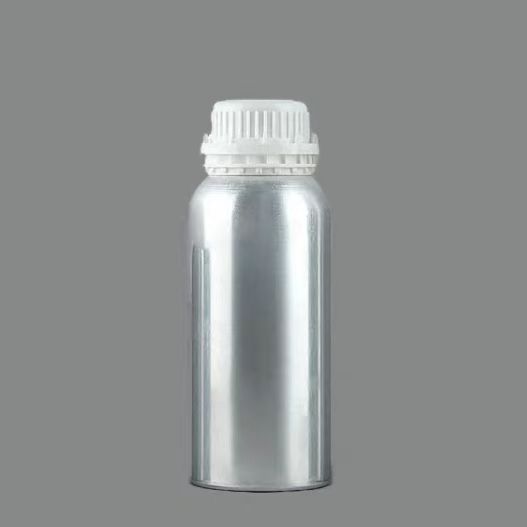
Description
AtomFair Battery Grade Lithium Carbonate (Li₂CO₃, Research Grade)
AtomFair Battery Grade Lithium Carbonate is a high-purity lithium source reagent for the preparation of lithium-ion battery cathode materials, featuring ultra-low impurity content and stable physical-chemical properties, suitable for scientific research scenarios such as battery material sintering and electrochemical performance regulation.
1. Basic Information
| Item | Details |
|---|---|
| Material Name | Lithium Carbonate (Li₂CO₃) |
| Product Application | Lithium battery material preparation (providing lithium source) |
| Product Code | 01003702 |
| Packaging Specification | 1kg / Bottle |
| Core Characteristics | Purity ≥99.5%, controllable impurity content, suitable for battery material sintering process |
2. Key Parameter Indicators (Content Requirements and Test Reference)
| Component | Unit | Content Requirement | Test Result Reference |
|---|---|---|---|
| Li₂CO₃ | % | ≥99.5 | 99.79 |
| Sodium (Na) | ppm | ≤50 | 18 |
| Magnesium (Mg) | ppm | ≤10 | 1 |
| Calcium (Ca) | ppm | ≤50 | 2 |
| Potassium (K) | ppm | ≤10 | 2 |
| Iron (Fe) | ppm | ≤10 | 1 |
| Zinc (Zn) | ppm | ≤3 | 1 |
| Lead (Pb) | ppm | ≤3 | 1 |
| Silicon (Si) | ppm | ≤30 | 1 |
| Aluminum (Al) | ppm | ≤10 | 1 |
| Manganese (Mn) | ppm | ≤3 | 1 |
| Nickel (Ni) | ppm | ≤10 | 1 |
| Copper (Cu) | ppm | ≤3 | 1 |
| Sulfate (SO₄²⁻) | ppm | ≤500 | 278 |
| Chloride (Cl⁻) | ppm | ≤30 | 7 |
| Moisture | % | ≤0.20 | 0.09 |
| Magnetic Substances | ppb | ≤98 | 28 |
| Particle Size D60 | μm | 4~6 | 5.58 |
| Particle Size D90 | μm | ≤15 | 11.45 |
3. Advantages for Scientific Research Applications
- High-Purity Lithium Source: Li₂CO₃ purity reaches 99.79% (meeting battery-grade standard of ≥99.5%), providing precise lithium source for sintering of cathode materials (e.g., LiCoO₂, LiFePO₄);
- Low Impurity Interference: Content of metal impurities (Na, Fe, Cu, etc.) is far below the limit, avoiding negative impacts of impurities on battery electrochemical performance (e.g., cycle stability, internal resistance);
- Particle Size Adaptability: D60 and D90 particle sizes meet process requirements for mixing and sintering of battery materials, ensuring material homogeneity.
4. Suitable Scientific Research Scenarios
- Synthesis of lithium-ion battery cathode materials (layered oxides, polyanion-type materials);
- Preparation of solid electrolytes (lithium-based oxides);
- Variable experiments on the correlation between battery material composition and electrochemical performance.
If you’re interested, have any questions, or have specific customization requirements, please feel free to contact us at inquiry@atomfair.com.