Description
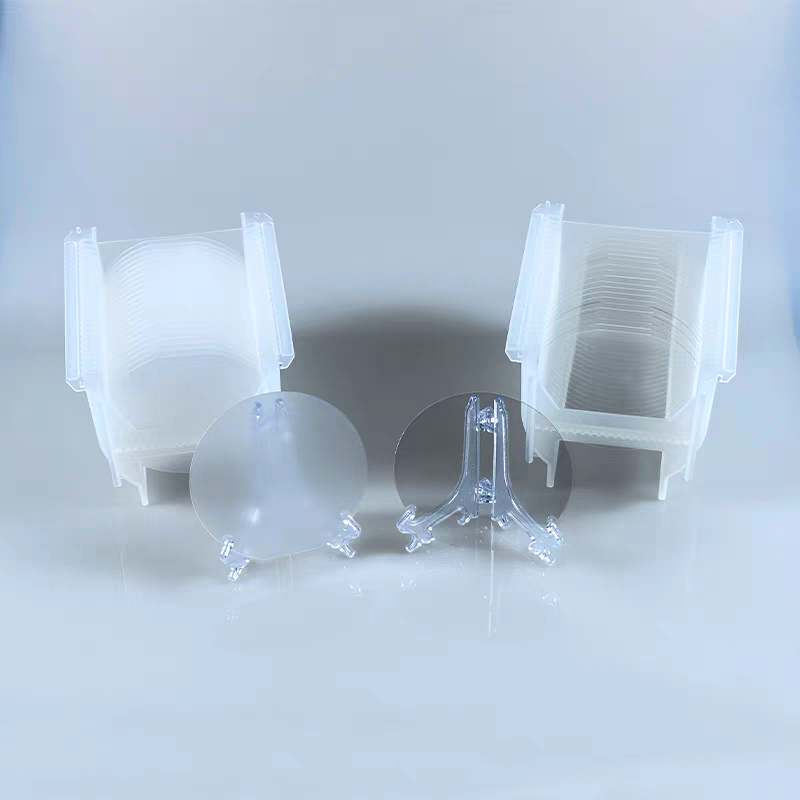
LiNbO3 Lithium Niobate Crystals and Wafers
| Size |
Thickness |
Crystal Orientation |
Polishing Specification |
| 3 Inch |
0.5mm |
X-cut |
Single-side Polished |
| 3 Inch |
0.5mm |
X-cut |
Double-side Polished |
| 3 Inch |
0.5mm |
Y-cut |
Single-side Polished |
| 3 Inch |
0.5mm |
Z-cut |
Single-side Polished |
| 3 Inch |
0.5mm |
Y36-cut |
Single-side Polished |
| 3 Inch |
0.5mm |
Y41-cut |
Single-side Polished |
| 3 Inch |
0.5mm |
Y64-cut |
Single-side Polished |
| 3 Inch |
0.5mm |
Y128-cut |
Single-side Polished |
| 3 Inch |
0.5mm |
Y-cut |
Double-side Polished |
| 3 Inch |
0.5mm |
Z-cut |
Double-side Polished |
| 3 Inch |
0.5mm |
Y36-cut |
Double-side Polished |
| 3 Inch |
0.5mm |
Y41-cut |
Double-side Polished |
| 3 Inch |
0.5mm |
Y64-cut |
Double-side Polished |
| 3 Inch |
0.5mm |
Y128-cut |
Double-side Polished |
| 4 Inch |
0.5mm |
X-cut |
Single-side Polished |
| 4 Inch |
0.5mm |
X-cut |
Double-side Polished |
| 4 Inch |
0.5mm |
Y-cut |
Single-side Polished |
| 4 Inch |
0.5mm |
Z-cut |
Single-side Polished |
| 4 Inch |
0.5mm |
Y36-cut |
Single-side Polished |
| 4 Inch |
0.5mm |
Y41-cut |
Single-side Polished |
| 4 Inch |
0.5mm |
Y64-cut |
Single-side Polished |
| 4 Inch |
0.5mm |
Y128-cut |
Single-side Polished |
| 4 Inch |
0.5mm |
Y-cut |
Double-side Polished |
| 4 Inch |
0.5mm |
Z-cut |
Double-side Polished |
| 4 Inch |
0.5mm |
Y36-cut |
Double-side Polished |
| 4 Inch |
0.5mm |
Y41-cut |
Double-side Polished |
| 4 Inch |
0.5mm |
Y64-cut |
Double-side Polished |
| 4 Inch |
0.5mm |
Y128-cut |
Double-side Polished |
| 6 Inch |
0.5mm |
X-cut |
Single-side Polished |
| 6 Inch |
0.5mm |
X-cut |
Double-side Polished |
| 6 Inch |
0.5mm |
Y-cut |
Single-side Polished |
| 6 Inch |
0.5mm |
Z-cut |
Single-side Polished |
| 6 Inch |
0.5mm |
Y36-cut |
Single-side Polished |
| 6 Inch |
0.5mm |
Y41-cut |
Single-side Polished |
| 6 Inch |
0.5mm |
Y64-cut |
Single-side Polished |
| 6 Inch |
0.5mm |
Y128-cut |
Single-side Polished |
| 6 Inch |
0.5mm |
Y-cut |
Double-side Polished |
| 6 Inch |
0.5mm |
Z-cut |
Double-side Polished |
| 6 Inch |
0.5mm |
Y36-cut |
Double-side Polished |
| 6 Inch |
0.5mm |
Y41-cut |
Double-side Polished |
| 6 Inch |
0.5mm |
Y64-cut |
Double-side Polished |
| 6 Inch |
0.5mm |
Y128-cut |
Double-side Polished |
| 3 Inch |
350μm |
Z-cut |
Double-side Polished (Optical Grade) |
| 3 Inch |
1.46mm |
Y-cut |
Double-side Polished (Optical Grade) |
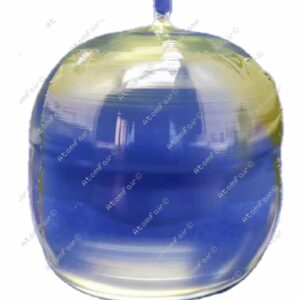
Lithium Niobate (chemical formula: LiNbO₃, abbreviated as LN) is an artificial crystal integrating multiple exceptional properties, including piezoelectricity, electro-optics, acousto-optics, and nonlinear optics. Dubbed the “optical silicon,” it occupies an irreplaceable position in fields such as optical communications, optical sensing, quantum technology, and piezoelectric devices. The performance of LN is inherently linked to its crystal cut direction—by slicing the crystal along different principal axes or specific angles, critical parameters such as piezoelectric coefficients, electro-optic coefficients, and refractive indices can be precisely tailored to meet diverse application requirements.
Based on the crystal’s principal axes (X, Y, Z axes), LN cuts are categorized into principal cuts (directly along the principal axes) and angular cuts (offset from the principal axes by specific angles, e.g., Y36, Y41). Below is a detailed overview of the most widely adopted cuts in industry and their core characteristics:
- Cutting Method: Sliced perpendicular to the X-axis, with the wafer surface parallel to the Y-Z plane.
- Core Advantages:
- Balanced piezoelectric performance, high electromechanical coupling coefficient, and excellent mechanical stability.
- Significant transverse electro-optic coefficient (r₂₂) in electro-optic effects, enabling fast response speeds.
- Typical Applications:
- Piezoelectric devices: High-frequency filters, Surface Acoustic Wave (SAW) devices, piezoelectric sensors.
- Electro-optic devices: Optical modulators, optical switches (suitable for long-haul optical communication systems).
- Note: X-cut wafers exhibit superior temperature stability, making them ideal for industrial-grade devices requiring robust environmental adaptability.
- Cutting Method: Sliced perpendicular to the Y-axis, with the wafer surface parallel to the X-Z plane.
- Core Advantages:
- Outstanding electro-optic coefficients (r₁₃, r₃₃) and high electro-optic modulation efficiency.
- Excellent longitudinal piezoelectric coefficient, well-suited for fabricating longitudinal vibration devices.
- Typical Applications:
- Electro-optic devices: High-speed optical modulators (e.g., 5G/6G optical communications, quantum communications), electro-optic deflectors.
- Piezoelectric devices: Longitudinal ultrasonic transducers, high-precision piezoelectric actuators.
- Note: Y-cut wafers feature excellent optical uniformity, making them one of the preferred choices for high-end electro-optic devices.
- Cutting Method: Sliced perpendicular to the Z-axis (optical axis of the crystal), with the wafer surface parallel to the X-Y plane.
- Core Advantages:
- Optimal nonlinear optical performance, featuring the highest second-harmonic generation (SHG) coefficient (d₃₃) and low optical transmission loss.
- Significant longitudinal electro-optic coefficient (r₃₃) in electro-optic effects, supporting wide modulation bandwidth.
- Typical Applications:
- Nonlinear optical devices: Laser frequency doublers (e.g., converting 1064nm to 532nm green light), optical parametric oscillators (OPOs).
- Electro-optic devices: Ultra-high-speed optical modulators (suitable for data centers, coherent optical communications).
- Note: Z-cut wafers are temperature-sensitive and require temperature control modules for operation. However, they offer the highest optical performance ceiling, serving as core materials in advanced laser technologies.
Angular cuts are derived from the Y-cut, with the crystal sliced at specific angles (36°, 41°, 64°, 128°) offset from the Y-axis. Their primary purpose is to optimize piezoelectric/electro-optic performance in targeted directions and address performance limitations of principal cuts (e.g., poor temperature stability, vibration mode interference). These cuts represent “customized solutions” for niche applications:
- Common Characteristics: Angular cuts offer highly targeted performance and must be selected based on specific device requirements, such as operating frequency, ambient temperature, and key performance indicators (e.g., modulation speed, filter bandwidth). They serve as core solutions for high-end customized devices.
If you’re interested, have any questions, or have specific customization requirements, please feel free to contact us at inquiry@atomfair.com.