Description
Key Advantages
Zero Background Radiation
Free of radioactive impurities, ensuring no spurious signals that could interfere with low-dose measurements. This purity is essential for sensitive applications like small animal PET or dark matter research, where even minor noise can distort results.
Fast Decay Time (62 ns)
Significantly faster than BGO or NaI(Tl), minimizing signal pile-up in high-count-rate scenarios—such as busy clinical TOF-PET centers or particle colliders. Critical for time-of-flight imaging, where faster decay directly improves temporal resolution and reduces scan time.
High Light Output (18,000 Photons/MeV)
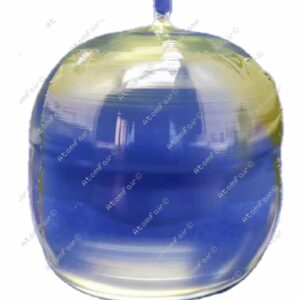
Emits blue light (peak wavelength: 420 nm) with consistent intensity proportional to incident radiation energy, ensuring strong signal-to-noise ratios for precise energy quantification and high-resolution imaging.
Superior Energy Resolution
Combined with its light output, YSO offers excellent ability to distinguish between radiation energies, enabling clear separation of isotopes in multi-tracer studies (e.g., dual-isotope PET scans).
Non-Hygroscopic
Completely resistant to moisture absorption, eliminating the need for protective coatings or hermetic sealing. This simplifies device design, reduces maintenance costs, and ensures long-term stability in humid environments (e.g., clinical labs or research facilities).
Mechanical Durability (5.8 Mohs)
Resistant to scratches and handling damage during detector assembly, making it suitable for both fixed systems (e.g., hospital PET scanners) and portable devices (e.g., field radiation monitors).
Technical Specifications
Yttrium silicate (Y₂SiO₅) has a density of 4.5 g/cm³, a melting point of 2273 K (2000°C), an effective atomic number of 39, a hardness of 5.8 Mohs, a refractive index of 1.8, a light yield of 18,000 photons/MeV, a decay time of 62 ns, an emission wavelength of 420 nm (blue), and no hygroscopicity.
Every advanced material, component, equipment, and instrument in our catalog is backed by rigorous testing. We maintain strict internal quality management frameworks and align with CE conformity metrics to deliver transparent, reproducible performance data via our public open-science repository.
To request raw batch performance data, submit formal vendor registration paperwork, or execute a fast-turnaround R&D manufacturing loop, contact us at inquiry@atomfair.com.
Item is dispatched under the Atomfair Shipping & Delivery Framework (Free worldwide shipping on orders over $59 USD). Return is governed by the Atomfair Return & Refund Policy (7-day technical return window).